India-Japan Nuclear Deal: Setback To International Non-Proliferation Efforts – OpEd
Tokyo, November 11

Shedding its reservations, Japan on Friday made a special case to sign a point of interest common atomic manage India, opening the entryway for fare of its nuclear innovation and reactors, in the wake of including elements like wellbeing and security remembering its sensitivities on the issue.
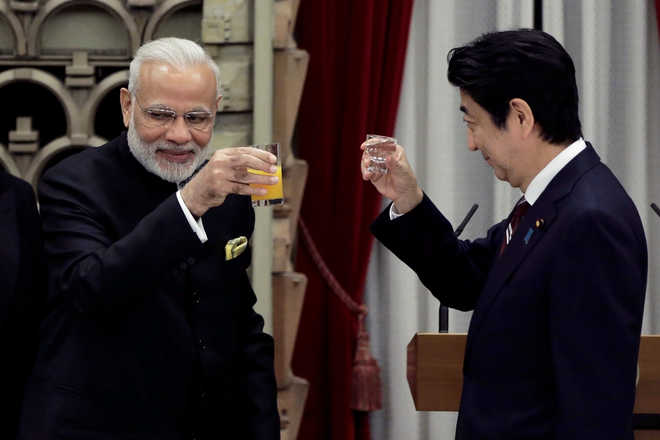
The atomic arrangement, depicted as noteworthy by Prime Minister Narendra Modi, was a piece of the 10 understandings marked between the two nations in different zones after he held converses with his Japanese partner Shinzo Abe on the second day of his three-day visit.
The atomic understanding comes after extreme transactions for more than six years between the two nations and Foreign Secretary S Jaishankar said the atomic arrangement was like the assentions marked with the US and different nations with included elements wellbeing and security with regards to Japan's sensitivities.
(Take after The Tribune on Facebook; and Twitter @thetribunechd)
At the joint media connection with Modi, Abe said he was pleased over the consenting to of the arrangement on tranquil utilization of atomic vitality.
"This understanding is a lawful system that India will act mindfully in tranquil employments of atomic vitality furthermore in Non-Proliferation administration despite the fact that India is not a member or signatory of NPT," he said.
"It (the understanding) is in accordance with Japan's aspiration to make a world without atomic weapons," said Abe, whose nation has generally embraced an intense remain on multiplication issues having been the main casualty of nuclear bombings amid World War II.
He noticed that India in September 2008 had made its aim of tranquil employments of atomic vitality furthermore reported ban on atomic tests.
"Today's consenting to of the Arrangement for Cooperation in Peaceful Uses of Nuclear Energy denote a memorable stride in our engagement to manufacture a perfect vitality organization," Modi said.
"Our participation in this field will help us battle the test of environmental change. I additionally recognize the exceptional centrality that such an understanding has for Japan," he said and expressed gratitude toward Abe, Japanese government and Parliament for their support to this assention.
The arrangement would permit Japan to send out atomic innovation to India, making it the main non-NPT signatory to have such an arrangement with Tokyo. It would likewise concrete the respective financial and security ties as the two nations warm up to counter a decisive China.
There was political resistance in Japan- - the main nation to endure nuclear bombings amid World War II- - against an atomic manage India, especially after the fiasco at the Fukushima Nuclear Power Plant in 2011.
Abe pushed for universalisation of the NPT, section into drive of Comprehensive Nuclear-Test-Ban Treaty (CTBT) and begin of arrangements at the most punctual on Fissile Material Cutoff Treaty (FMCT).
Later, a joint articulation stated, "The two Prime Ministers respected the consenting to of the Arrangement between the Government of Japan and the Government of the Republic of India for Cooperation in the Peaceful Uses of Nuclear Energy which mirrors another level of shared certainty and key organization in the reason for clean vitality, financial improvement and a serene and secure world."
In his comments, Prime Minister Modi said as vote based systems, the two nations "bolster openness, straightforwardness and the govern of law".
"We are likewise joined in our take steps to battle the threat of psychological warfare, particularly cross-outskirt fear mongering," he said.
The two sides likewise called upon all nations to work towards wiping out fear places of refuge, disturbing their systems and halting cross-outskirt development of psychological oppressors, in an evident reference to Pakistan.
"The two Prime Ministers denounced fear mongering in most grounded terms in every one of its structures and appearances in the soul of 'zero resilience'," the joint articulation said.
The two pioneers noted with extraordinary concern the developing threat of psychological oppression and fierce radicalism and its all inclusive reach.
"They called upon all nations to execute the UNSC Resolution 1267 and other important resolutions assigning fear based oppressor substances," it stated, alluding to India's offer to get Jaish-e-Mohammed boss Masood Azhar assigned as worldwide a psychological militant under this determination.
China- - a veto-employing changeless individual from the Security Council- - had obstructed India's turn to put a restriction on Azhar under the Al-Qaeda Sanctions Committee of the Council.
With respect to financial and exchange ties, Modi said further monetary engagement, development of exchange, assembling and venture ties, concentrate on clean vitality, association to secure the natives, and collaboration on foundation and expertise improvement are among key needs in the Indo-Japan relationship.
"India and its economy are seeking after numerous changes. Our point is to end up distinctly a noteworthy place for assembling, speculations and for the 21st century learning enterprises.
"Furthermore, in this adventure, we consider Japan to be a characteristic accomplice. We accept there is unfathomable degree to consolidate our relative favorable circumstances, whether of capital, innovation or HR, to work for common advantage," he said in his joint cooperation.
The Prime Minister said the vital organization between the two nations likewise brought peace, strength and adjust to the locale. It is alive and receptive to rising open doors and difficulties in Asia-Pacific, he said.
The effective Malabar maritime practice had underscored the merging in the two sides' vital advantages in the wide region of the waters of the Indo-Pacific, Modi said.
On his part, Abe said the fast prepare passage amongst Mumbai and Ahmedabad that is being worked with the assistance of Japan, saying the venture symbolized another measurement in the uncommon relations.
Head administrator Abe said the planning of the venture would start before the current year's over, development would start in 2018 and the fast prepare would be in administration from 2023.
He said Modi, who might go by one such prepare to Kobe city from here on Saturday, would see with his own eyes that it is the most secure innovation on the planet.
The Japanese private division additionally would set up a foundation of assembling in India to prepare around 30,000 individuals in 10 years, especially in rustic zones, Abe said.
Abe said Japan would set up a tourism authority in New Delhi to urge individuals to-individuals contacts. He said he needed to work with Modi in changing the visa rules.
"India-Japan relations have the best potential on the planet. Solid India is to the greatest advantage of Japan and solid Japan is to the greatest advantage of India," Abe said.
Taking note of that he had met Modi for the third time in one year, Abe lauded him, saying he had a "worldwide vision" and was a "conclusive pioneer".
Later preparation correspondents, Jaishankar said there was "meeting of psyches" between the two sides on countless and a noteworthy concentration zone was to further increase financial collaboration.
He said Japanese interest in India had gone up and need would be given to framework ventures, including the committed cargo passageway and Delhi-Mumbai Industrial Corridor.
Jaishankar said the "full design" to take forward the eco-participation was one of the significant highlights of the discussions.
Gotten some information about the proposed buy of 12 US-2 flying machine from Japan, the Foreign Secretary said the issue came up for some exchange and that India was all the while assessing the necessity of the flying machine.
On lead rapid rail extend, he said some essential choices were taken about it, including that it was concurred that the general expert would begin work in December while development work would begin by end of 2018 and the system would be made operational by 2023. PTI
Shedding its reservations, Japan on Friday made a special case to sign a point of interest common atomic manage India, opening the entryway for fare of its nuclear innovation and reactors, in the wake of including elements like wellbeing and security remembering its sensitivities on the issue.
The atomic arrangement, depicted as noteworthy by Prime Minister Narendra Modi, was a piece of the 10 understandings marked between the two nations in different zones after he held converses with his Japanese partner Shinzo Abe on the second day of his three-day visit.
The atomic understanding comes after extreme transactions for more than six years between the two nations and Foreign Secretary S Jaishankar said the atomic arrangement was like the assentions marked with the US and different nations with included elements wellbeing and security with regards to Japan's sensitivities.
(Take after The Tribune on Facebook; and Twitter @thetribunechd)
At the joint media connection with Modi, Abe said he was pleased over the consenting to of the arrangement on tranquil utilization of atomic vitality.
"This understanding is a lawful system that India will act mindfully in tranquil employments of atomic vitality furthermore in Non-Proliferation administration despite the fact that India is not a member or signatory of NPT," he said.
"It (the understanding) is in accordance with Japan's aspiration to make a world without atomic weapons," said Abe, whose nation has generally embraced an intense remain on multiplication issues having been the main casualty of nuclear bombings amid World War II.
He noticed that India in September 2008 had made its aim of tranquil employments of atomic vitality furthermore reported ban on atomic tests.
"Today's consenting to of the Arrangement for Cooperation in Peaceful Uses of Nuclear Energy denote a memorable stride in our engagement to manufacture a perfect vitality organization," Modi said.
"Our participation in this field will help us battle the test of environmental change. I additionally recognize the exceptional centrality that such an understanding has for Japan," he said and expressed gratitude toward Abe, Japanese government and Parliament for their support to this assention.
The arrangement would permit Japan to send out atomic innovation to India, making it the main non-NPT signatory to have such an arrangement with Tokyo. It would likewise concrete the respective financial and security ties as the two nations warm up to counter a decisive China.
There was political resistance in Japan- - the main nation to endure nuclear bombings amid World War II- - against an atomic manage India, especially after the fiasco at the Fukushima Nuclear Power Plant in 2011.
Abe pushed for universalisation of the NPT, section into drive of Comprehensive Nuclear-Test-Ban Treaty (CTBT) and begin of arrangements at the most punctual on Fissile Material Cutoff Treaty (FMCT).
Later, a joint articulation stated, "The two Prime Ministers respected the consenting to of the Arrangement between the Government of Japan and the Government of the Republic of India for Cooperation in the Peaceful Uses of Nuclear Energy which mirrors another level of shared certainty and key organization in the reason for clean vitality, financial improvement and a serene and secure world."
In his comments, Prime Minister Modi said as vote based systems, the two nations "bolster openness, straightforwardness and the govern of law".
"We are likewise joined in our take steps to battle the threat of psychological warfare, particularly cross-outskirt fear mongering," he said.
The two sides likewise called upon all nations to work towards wiping out fear places of refuge, disturbing their systems and halting cross-outskirt development of psychological oppressors, in an evident reference to Pakistan.
"The two Prime Ministers denounced fear mongering in most grounded terms in every one of its structures and appearances in the soul of 'zero resilience'," the joint articulation said.
The two pioneers noted with extraordinary concern the developing threat of psychological oppression and fierce radicalism and its all inclusive reach.
"They called upon all nations to execute the UNSC Resolution 1267 and other important resolutions assigning fear based oppressor substances," it stated, alluding to India's offer to get Jaish-e-Mohammed boss Masood Azhar assigned as worldwide a psychological militant under this determination.
China- - a veto-employing changeless individual from the Security Council- - had obstructed India's turn to put a restriction on Azhar under the Al-Qaeda Sanctions Committee of the Council.
With respect to financial and exchange ties, Modi said further monetary engagement, development of exchange, assembling and venture ties, concentrate on clean vitality, association to secure the natives, and collaboration on foundation and expertise improvement are among key needs in the Indo-Japan relationship.
"India and its economy are seeking after numerous changes. Our point is to end up distinctly a noteworthy place for assembling, speculations and for the 21st century learning enterprises.
"Furthermore, in this adventure, we consider Japan to be a characteristic accomplice. We accept there is unfathomable degree to consolidate our relative favorable circumstances, whether of capital, innovation or HR, to work for common advantage," he said in his joint cooperation.
The Prime Minister said the vital organization between the two nations likewise brought peace, strength and adjust to the locale. It is alive and receptive to rising open doors and difficulties in Asia-Pacific, he said.
The effective Malabar maritime practice had underscored the merging in the two sides' vital advantages in the wide region of the waters of the Indo-Pacific, Modi said.
On his part, Abe said the fast prepare passage amongst Mumbai and Ahmedabad that is being worked with the assistance of Japan, saying the venture symbolized another measurement in the uncommon relations.
Head administrator Abe said the planning of the venture would start before the current year's over, development would start in 2018 and the fast prepare would be in administration from 2023.
He said Modi, who might go by one such prepare to Kobe city from here on Saturday, would see with his own eyes that it is the most secure innovation on the planet.
The Japanese private division additionally would set up a foundation of assembling in India to prepare around 30,000 individuals in 10 years, especially in rustic zones, Abe said.
Abe said Japan would set up a tourism authority in New Delhi to urge individuals to-individuals contacts. He said he needed to work with Modi in changing the visa rules.
"India-Japan relations have the best potential on the planet. Solid India is to the greatest advantage of Japan and solid Japan is to the greatest advantage of India," Abe said.
Taking note of that he had met Modi for the third time in one year, Abe lauded him, saying he had a "worldwide vision" and was a "conclusive pioneer".
Later preparation correspondents, Jaishankar said there was "meeting of psyches" between the two sides on countless and a noteworthy concentration zone was to further increase financial collaboration.
He said Japanese interest in India had gone up and need would be given to framework ventures, including the committed cargo passageway and Delhi-Mumbai Industrial Corridor.
Jaishankar said the "full design" to take forward the eco-participation was one of the significant highlights of the discussions.
Gotten some information about the proposed buy of 12 US-2 flying machine from Japan, the Foreign Secretary said the issue came up for some exchange and that India was all the while assessing the necessity of the flying machine.
On lead rapid rail extend, he said some essential choices were taken about it, including that it was concurred that the general expert would begin work in December while development work would begin by end of 2018 and the system would be made operational by 2023. PTI
Comments
Post a Comment